mirror of
https://github.com/vrtmrz/obsidian-livesync.git
synced 2025-12-13 01:35:57 +00:00

159 lines
7.4 KiB
Markdown
159 lines
7.4 KiB
Markdown
# obsidian-livesync
|
|
|
|
This is the obsidian plugin that enables livesync between multi-devices.
|
|
Runs in Mac, Android, Windows, and iOS.
|
|
|
|
<!-- <div><video controls src="https://user-images.githubusercontent.com/45774780/137352386-a274736d-a38b-4069-ac41-759c73e36a23.mp4" muted="false"></video></div> -->
|
|
|
|
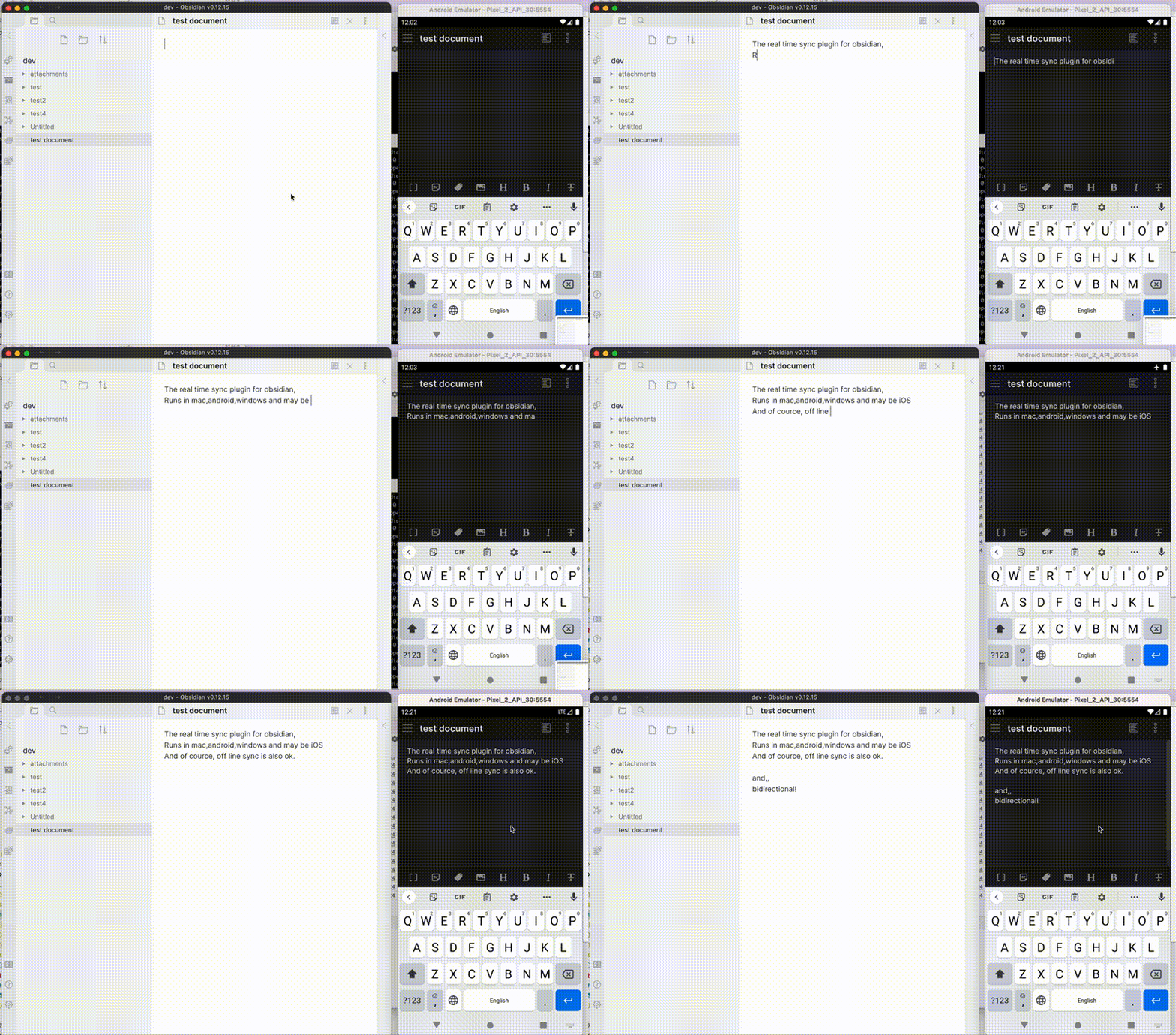
|
|
|
|
**It's beta. Please make sure to back your vault up!**
|
|
|
|
Limitations: Folder deletion handling is not completed.
|
|
|
|
## This plugin enables..
|
|
|
|
- Live Sync
|
|
- Self-Hosted data synchronization with conflict detection and resolving in Obsidian.
|
|
- Off-line sync is also available.
|
|
- Receive WebClip from [obsidian-livesync-webclip](https://chrome.google.com/webstore/detail/obsidian-livesync-webclip/jfpaflmpckblieefkegjncjoceapakdf)
|
|
|
|
## IMPORTANT NOTICE
|
|
|
|
**Please make sure to disable other synchronize solutions to avoid content corruption or duplication.**
|
|
If you want to synchronize to both backend, sync one by one, please.
|
|
|
|
## How to use
|
|
|
|
1. Install from Obsidian, or clone this repo and run `npm run build` ,copy `main.js`, `styles.css` and `manifest.json` into `[your-vault]/.obsidian/plugins/` (PC, Mac and Android will work)
|
|
2. Enable obsidian livesync in the settings dialog.
|
|
3. If you use your self-hosted CouchDB, set your server's info.
|
|
4. or Use [IBM Cloudant](https://www.ibm.com/cloud/cloudant), take an account and enable **Cloudant** in [Catalog](https://cloud.ibm.com/catalog#services)
|
|
Note please choose "IAM and legacy credentials" for the Authentication method
|
|
Setup details are in Couldant Setup Section.
|
|
5. Setup LiveSync or SyncOnSave or SyncOnStart as you like.
|
|
|
|
## Test Server
|
|
|
|
Setting up an instance of Cloudant or local CouchDB is a little complicated, so I made the [Tasting server of obsidian-livesync](https://olstaste.vrtmrz.net/) up. Try free!
|
|
Note: Please read "Limitations" carefully. Do not send your private vault.
|
|
|
|
## WebClipper is also available.
|
|
|
|
Available from on Chrome Web Store:[obsidian-livesync-webclip](https://chrome.google.com/webstore/detail/obsidian-livesync-webclip/jfpaflmpckblieefkegjncjoceapakdf)
|
|
Repo is here: [obsidian-livesync-webclip](https://github.com/vrtmrz/obsidian-livesync-webclip). (Docs are work in progress.)
|
|
|
|
## When your database looks corrupted or too heavy to replicate to a new device.
|
|
|
|
obsidian-livesync changes data treatment of markdown files since 0.1.0
|
|
When you are troubled with synchronization, **Please reset local and remote databases**.
|
|
_Note: Without synchronization, your files won't be deleted._
|
|
|
|
1. Update plugin on all devices.
|
|
1. Disable any synchronizations on all devices.
|
|
1. From the most reliable device<sup>(_The device_)</sup>, back your vault up.
|
|
1. Press "Drop History"-> "Execute" button from _The device_.
|
|
1. Wait for a while, so obsidian-livesync will say "completed."
|
|
1. In other devices, replication will be canceled automatically. Click "Reset local database" and click "I'm ready, mark this device 'resolved'" on all devices.
|
|
If it doesn't be shown. replicate once.
|
|
1. It's all done. But if you are sure to resolve all devices and the warning is noisy, click "I'm ready, unlock the database". it unlocks the database completely.
|
|
|
|
## Cloudant Setup
|
|
|
|
### Creating an Instance
|
|
|
|
1. Hit the "Create Resource" button.
|
|

|
|
|
|
1. In IBM Cloud Catalog, search "Cloudant".
|
|

|
|
|
|
1. You can choose "Lite plan" for free.
|
|

|
|
|
|
Select Multitenant(it's the default) and the region as you like.
|
|
 3. Be sure to select "IAM and Legacy credentials" for "Authentication Method".
|
|

|
|
|
|
4. Select Lite and be sure to check the capacity.
|
|

|
|
|
|
5. And hit "Create" on the right panel.
|
|

|
|
|
|
6. When all of the above steps have been done, Open "Resource list" on the left pane. you can see the Cloudant instance in the "Service and software". Click it.
|
|

|
|
|
|
7. In resource details, there's information to connect from obsidian-livesync.
|
|
Copy the "External Endpoint(preferred)" address. <sup>(\*1)</sup>
|
|

|
|
|
|
### CouchDB setup
|
|
|
|
1. Hit the "Launch Dashboard" button, Cloudant dashboard will be shown.
|
|
Yes, it's almost CouchDB's fauxton.
|
|

|
|
|
|
1. First, you have to enable the CORS option.
|
|
Hit the Account menu and open the "CORS" tab.
|
|
Initially, "Origin Domains" is set to "Restrict to specific domains"., so set to "All domains(\*)"
|
|
_NOTE: of course We want to set "app://obsidian.md" but it's not acceptable on Cloudant._
|
|

|
|
|
|
1. And open the "Databases" tab and hit the "Create Database" button.
|
|
Enter the name as you like <sup>(\*2)</sup> and Hit the "Create" button below.
|
|

|
|
|
|
1. If the database was shown with joyful messages, then you can close this browser tab now.
|
|

|
|
|
|
### Credentials Setup
|
|
|
|
1. Back into IBM Cloud, Open the "Service credentials". You'll get an empty list, hit the "New credential" button.
|
|

|
|
|
|
1. The dialog to create a credential will be shown.
|
|
type any name or leave it default, hit the "Add" button.
|
|

|
|
_NOTE: This "name" is not related to your username that uses in Obsidian-livesync._
|
|
|
|
1. Back to "Service credentials", the new credential should be created.
|
|
open details.
|
|

|
|
The username and password pair is inside this JSON.
|
|
"username" and "password" are so.
|
|
follow the figure, it's
|
|
"apikey-v2-2unu15184f7o8emr90xlqgkm2ncwhbltml6tgnjl9sd5"<sup>(\*3)</sup> and "c2c11651d75497fa3d3c486e4c8bdf27"<sup>(\*4)</sup>
|
|
|
|
### obsidian-livesync setting
|
|
|
|

|
|
example values.
|
|
|
|
| Items | Value | example |
|
|
| ------------------- | ----------- | --------------------------------------------------------------------------- |
|
|
| CouchDB Remote URI: | (\*1)/(\*2) | https://xxxxxxxxxxxxxxxxx-bluemix.cloudantnosqldb.appdomain.cloud/sync-test |
|
|
| CouchDB Username | (\*3) | apikey-v2-2unu15184f7o8emr90xlqgkm2ncwhbltml6tgnjl9sd5 |
|
|
| CouchDB Password | (\*4) | c2c11651d75497fa3d3c486e4c8bdf27 |
|
|
|
|
# Designed architecture
|
|
|
|
## How does this plugin synchronize.
|
|
|
|

|
|
|
|
1. When notes are created or modified, Obsidian raises some events. obsidian-live-sync catch these events and reflect changes into Local PouchDB.
|
|
2. PouchDB automatically or manually replicates changes to remote CouchDB.
|
|
3. Another device is watching remote CouchDB's changes, so retrieve new changes.
|
|
4. obsidian-live-sync reflects replicated changeset into Obsidian's vault.
|
|
|
|
Note: The figure is drawn as single-directional, between two devices. But everything occurs bi-directionally between many devices at once in real.
|
|
|
|
## Techniques to keep bandwidth low.
|
|
|
|

|
|
|
|
# License
|
|
|
|
The source code is licensed MIT.
|